عن ماذا تبحث?
Ceramic wool for exhaust silencers should be purchased against an identified fiber grade and an approved packing arrangement, not simply a higher temperature number. A ceramic sheet that matches the dimensions of an existing fiberglass piece is not automatically an equivalent replacement.
For an OEM project, establish what the proposed material is, how it will behave at the packing location and what evidence is needed before production release. These decisions connect the material specification to the finished silencer rather than treating thermal insulation and acoustic performance as the same requirement.
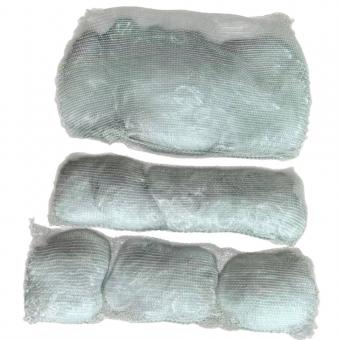
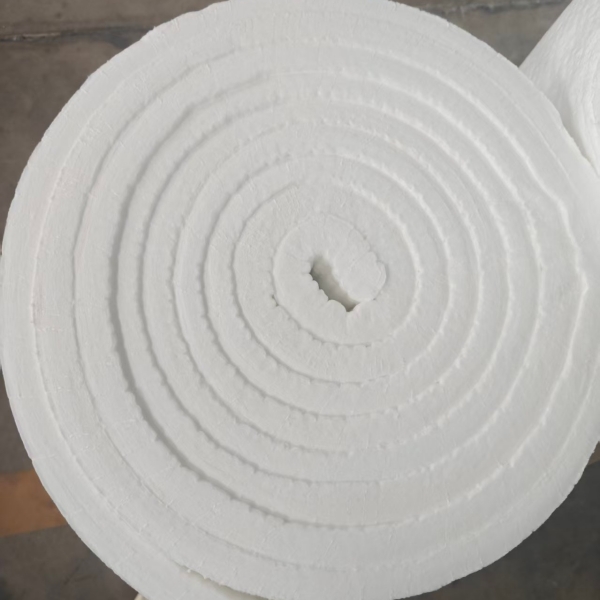
BSTFLEX offers ceramic fiber silencer and muffler packing in sheet-format kits. Use that product as the starting reference, then provide the required dimensions, operating conditions and sample acceptance criteria.
Start with the existing design and the observed problem. Record whether the concern is material damage after sustained heating, loss of packing beside the core, contamination, poor initial filling or a change in the required duty cycle.
A higher-temperature fiber is not a demonstrated solution to every one of those problems. Missing material beside an uncovered joint, for example, calls for a review of the joint and retention arrangement. Do not assume that a ceramic replacement resolves the fault without changing anything else.
For a new design, define the thermal and acoustic targets before selecting the packing. For a replacement, keep the existing fiberglass exhaust silencer packing specification as a comparison reference where available. Document which variables the ceramic trial changes.
Ceramic muffler packing and ceramic exhaust wool are purchasing descriptions, not complete chemical specifications. Request the exact material designation, composition and current technical data sheet for the proposed grade.
High-temperature insulation includes refractory ceramic fibers, alkaline earth silicate fibers and polycrystalline wool fibers. These are distinct material families. A description such as white insulation wool or high-temperature blanket does not establish which one is being supplied.
Do not assume that the BSTFLEX product belongs to a particular fiber family, is low-biopersistent or is interchangeable with another supplier's grade without confirmation. Any proposed alternative should identify its composition and supporting documents separately.
Also specify the sheet construction. Ask whether it is mechanically needled, contains a binder, incorporates stitching or includes another support layer. A binder-free claim must apply to the supplied component, not merely to the underlying fiber.
For high temperature ceramic muffler packing, distinguish a classification temperature from a recommended continuous-use condition. A short peak and the temperature at the outer shell are different inputs again.
| Data Item | Question for Material Approval |
|---|---|
| Classification temperature | What test method, duration and acceptance criterion support the stated classification? |
| Continuous service recommendation | What sustained temperature and atmosphere are covered for the proposed grade and construction? |
| Peak exposure | What are the expected maximum, duration and frequency, and where are they measured? |
| Permanent dimensional change | What shrinkage data are available after a defined temperature exposure, and under what specimen conditions? |
| Application validation | What evidence addresses the actual silencer, including its filling arrangement and operating duty? |
Do not derive a service limit by subtracting an arbitrary fixed allowance from the classification number. Request a recommendation relevant to the application. Likewise, a melting point is not an operating specification.
Assess shrinkage results against the test temperature, exposure time and specimen condition. A percentage without those details cannot be meaningfully compared with another grade. It also does not establish the behavior of a compressed layer undergoing exhaust pulses and vibration.
The existing BSTFLEX ceramic fiber muffler packing listing includes 1/2-inch and 1-inch thicknesses, with 12-by-24-inch and 24-by-24-inch kit sizes. The metric equivalents below are dimensional conversions, not extra stock options or manufacturing tolerances.
| Listed Dimension | Metric Equivalent |
|---|---|
| 1/2-inch thickness | 12.7 mm |
| 1-inch thickness | 25.4 mm |
| 12-by-24-inch kit size | 304.8 by 609.6 mm |
| 24-by-24-inch kit size | 609.6 by 609.6 mm |
Confirm the required size and availability when requesting a quote. Do not decide the number of kits from engine displacement or a general statement that one package fills a certain number of mufflers.
Provide the usable internal shell profile, core outside dimensions and effective packed length. Mark end spaces, partitions and metallic liners. Then agree a cutting layout and material quantity for the actual packing region.
Where another size is required, submit the drawing for review rather than assuming the standard kit can be stretched, compressed or trimmed without changing its specification.
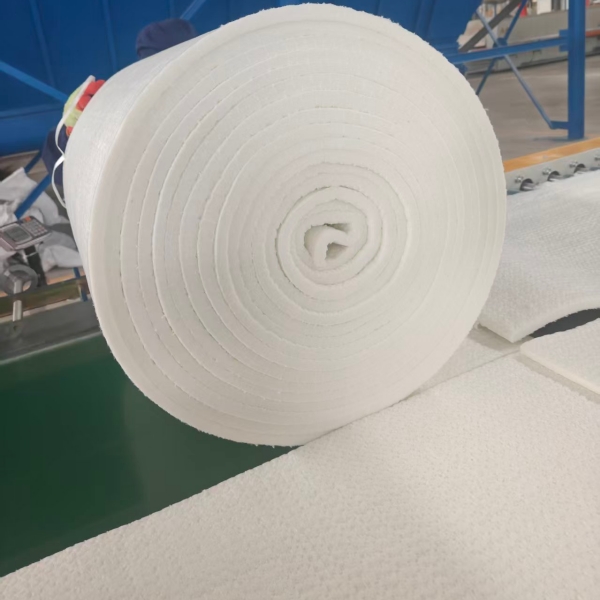
A ceramic packing sheet needs more than an outside size. Define nominal thickness and the measurement condition, material mass per unit area or bulk density where applicable, and the quantity intended for each silencer.
Distinguish a blanket's supplied density from the average density after installation. Record whether the stated mass covers the fiber-only material or the complete sheet with any binder, cover or support. Use the same basis for the approved sample and incoming inspection.
More material is not automatically better. If a thicker sheet is substituted, review core clearance, overlap, closure and the space assigned to each layer. Do not force the shell closed and treat that as proof that the replacement quantity is correct.
Request the current safety data sheet for the exact proposed material before cutting, installation or removal trials. Refractory ceramic fibers raise inhalation concerns; some ceramic fibers carry carcinogenicity classifications. An unidentified ceramic wool should not be described as harmless, dust-free or low-biopersistent.
Have the workplace safety assessment define exposure controls, ventilation, protective clothing, eye protection and respiratory protection where required. Control exposure at the source rather than treating gloves or a face covering as a complete handling procedure.
Keep packaging and part labels linked to the material identity. Use the approved methods for cutting, housekeeping and waste collection; avoid operations that unnecessarily release fibers into the work area. Check the instructions for previously heated material separately before removing an old charge.
The safety data sheet addresses hazards and handling. The technical data sheet describes material properties. Neither document alone demonstrates the sound performance of the finished exhaust.
Show the position of the ceramic fiber on the silencer cross-section. Keep the main gas passage clear and identify any core-side liner, outer enclosure or separate end filling. A material temperature rating does not approve removing one of those components.
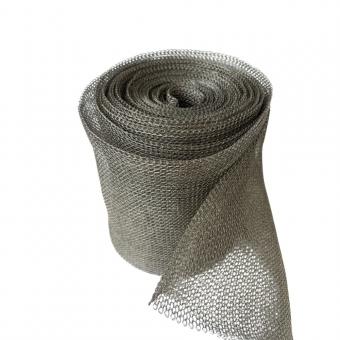
Where the design requires an outer retainer, the BSTFLEX muffler packing retaining screen is a separate product reference. Review the selected openings, coverage and fastening arrangement with the proposed fiber; a generic mesh designation is not proof of retention.
For a composite assembly, identify each constituent and its quantity. A supporting wire layer and the main acoustic filling should remain separate lines in the material specification, even when purchased together.
A sound comparison should identify the shell, perforated core, material charge, layer arrangement and operating conditions. Record differences between the ceramic trial and the approved reference instead of attributing every result to the word ceramic.
After the agreed thermal and operating trial, inspect coverage, gaps, migration and the condition of the packing. Compare sound under the same documented procedure and include pressure-loss measurements where the exhaust program requires them.
Do not approve a claim that ceramic silencer packing is quieter simply because it has a higher temperature classification or a higher supplied density. Set the acceptance criteria around the complete assembly, and keep the tested material reference with the result.
A production order should link the approved material and safety documents to the component drawing. Include the ceramic fiber grade, supplied sheet dimensions, thickness measurement method, agreed weight basis and acceptance limits.
Add the cutting layout, included retaining parts, sample approval reference and labeling requirements. For recurring supply, agree how lots will be identified and which changes require notification or renewed approval. Those changes may include fiber grade, binder, sheet density, dimensions or supporting materials.
For OEM muffler packing, compare quotations on the quantity needed per accepted silencer, including cutting yield and preparation work. State whether you need standard kits or want to discuss a defined cut component. Request the actual sample lead time, production lead time and minimum order for the proposed construction.
Drawing- and sample-based requirements can be reviewed through the BSTFLEX OEM muffler packing manufacturing service.
Not solely on that basis. Compare the material grade, sheet weight, installed charge, retention and handling requirements. The replacement should be approved in the actual silencer, even when the cut dimensions match.
Do not assume heat-release behavior from the name. That feature requires a specified construction. A conventional ceramic sheet is not automatically equivalent to a compressed glass-fiber sheet held by heat-responsive stitching.
No universal compatibility follows from the engine cycle. Use the particular silencer's material and assembly requirements, operating conditions and validation results.
A furnace-insulation rating alone does not establish exhaust suitability. Review the exact fiber grade, material form, retention, exposure controls and complete-silencer performance before approving it for that application.
Send BSTFLEX the silencer drawing or internal dimensions, current material reference, required packing quantity and operating conditions. Include the sample quantity, intended production volume and documents needed for engineering and purchasing approval.
Review the ceramic fiber muffler packing product for the existing sheet-kit format. Other materials and components are available in the Muffler Packing range when a different construction better matches the approved exhaust design.

No.10, Chuangxin North Road, Nanshan Park, Ningguo Economic and Technological Development Zone, Ningguo City, Anhui Province, China
هاتف/Whatsapp : 0086-15856303740
البريد الإلكتروني : sales@bstbraidedsleeve.com
Skype : vanesa-cheng