عن ماذا تبحث?

BSTFLEX is an exhaust wrap manufacturer supplying fiberglass, titanium and silica constructions for OEM assemblies, aftermarket product ranges and private-label distribution. Projects can be specified around the wrap material, width, roll length, fastening hardware and packaging rather than a fixed retail configuration.
For a quotation, send the application, required dimensions, quantity and packaging format. A pipe drawing or reference sample is useful when the wrap must fit an existing exhaust assembly. Start with the BSTFLEX exhaust and header heat wrap range, then define the details needed for your production line or sales channel.
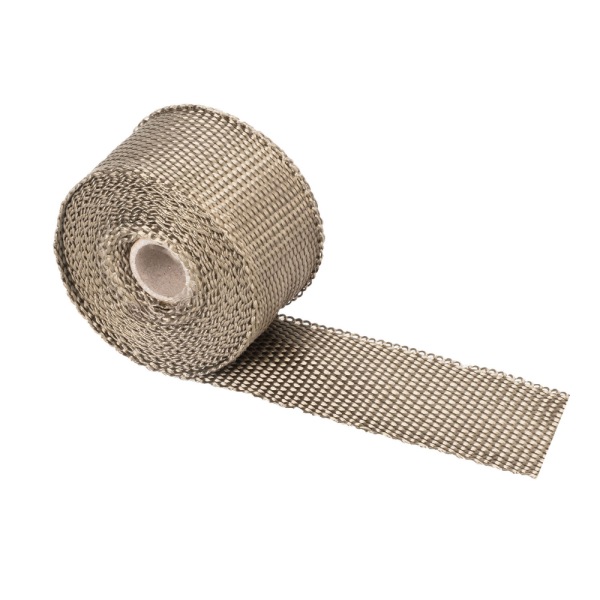
An exhaust manufacturer may need a defined length of wrap for each finished header. A distributor may need the same material supplied as individually packed rolls with its own product codes. The underlying wrap can be similar, but the purchasing specification should reflect how it will be used.
| Supply requirement | What the order should define | What to confirm on the sample |
|---|---|---|
| OEM exhaust assembly | Material grade, usable length per assembly, dimensions, fastening and installation requirements | Fit, coverage, material consumption and clearance on the actual pipe |
| Wholesale exhaust wrap rolls | Roll sizes, finish, quantity by product code and carton configuration | Roll dimensions, identification and handling for storage or repacking |
| Private label exhaust wrap kits | Wrap specification, accessory quantities, label artwork and installation insert | Complete kit contents, packaging fit and consistency between label and product |
Separate these requirements at the quotation stage. A price for bulk wrap alone should not be compared directly with a price that includes individual packaging, metal ties and printed instructions.
A color and a roll size do not fully identify an exhaust wrap. Specify the product construction first, then agree the finish and packaging. Changing the label does not change the material's thermal capability.
For projects considering a fiberglass construction, Black Glass Fiber Exhaust Wrap provides a product starting point. Identify the required width, thickness, finish and temperature exposure so the proposed grade can be reviewed against the application.
For a titanium exhaust wrap product range, review Black Titanium Exhaust Pipe Wrap. The listed configurations include 1-inch and 2-inch widths in several roll lengths. Use the selected product reference when requesting samples so the quotation and approved sample refer to the same construction.
For a high-temperature silica construction, review BSTFLEX silica exhaust wrap. Confirm the applicable operating limits in the agreed technical specification before printing a temperature claim on a private-label package.
When supplying several material families, keep a separate specification for each. Do not apply one temperature statement, installation instruction or performance claim across the whole range unless it has been established for every included product.
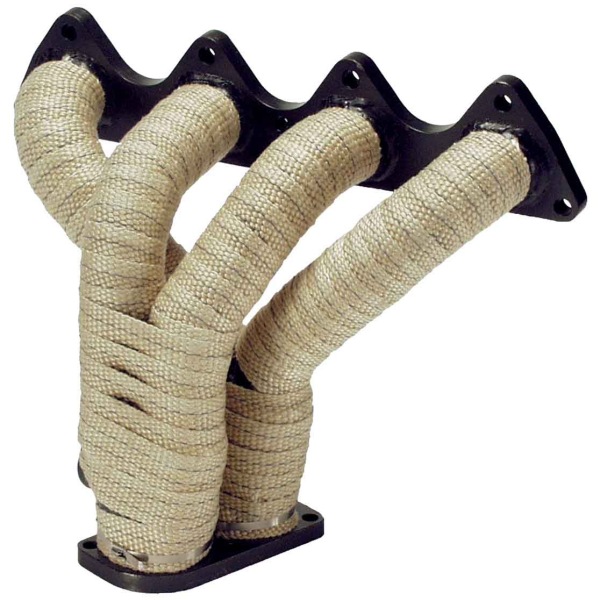
Custom exhaust wrap should be ordered using actual dimensions and agreed tolerances. The product name alone is not enough to control what arrives at the assembly line or warehouse.
A 2-inch width equals 50.8 mm, not exactly 50 mm. Likewise, a 50 ft roll equals 15.24 m, not 15 m. Either dimension may suit a project, but the order and package label should identify the dimension actually supplied.
For a product sold in multiple markets, agree the primary manufacturing dimension and the secondary label conversion. Do not silently substitute a shorter metric roll for an inch-based specification.
For OEM work, state the minimum usable length required per assembly and how the length will be checked. Clarify whether joints are permitted within a roll and whether any end allowance is included in the specified length.
A nominal roll length can be unsuitable when an assembly requires one uninterrupted piece. Identify that requirement before sample preparation rather than discovering it during installation.
Discuss individually wound rolls, longer bulk rolls or cut lengths according to the way the material will be handled. Longer rolls may suit a workstation that measures and cuts each piece. A defined cut length may suit a repeat assembly after consumption has been confirmed.
Use the Exhaust Wrap Calculator and Sizing Guide for initial quantity planning. Confirm the final length on the actual assembly before placing a repeat production order.
A private label exhaust wrap kit needs more than a branded bag. Give each kit a product code and a written list of everything included. That list should distinguish the wrap specification from the accessory and packaging requirements.
Define the number of rolls, width and length of each roll, material, finish, and the type and quantity of fastening hardware. For metal ties, include the required length and locking arrangement rather than specifying only a total count.
Packaging requirements can include your product name, part number, barcode artwork, installation insert and outer-carton identification. Submit these items for review with the product specification so the package can be checked around the complete kit.
BSTFLEX offers custom packing and labeling services for OEM and industrial programs. Specify the required format in the inquiry; final packaging details should be confirmed against the approved sample and quotation.
Before approving artwork, check that the material name, dimensions, included accessories and installation instructions match the product being supplied. A package for one construction should not be reused for another without review.
Where a temperature rating is stated, identify the exposure condition behind it. Continuous operation, a short peak and radiant exposure are not equivalent specifications. Request the relevant technical information rather than printing the largest number from a general product description.
Installation instructions should also remain product-specific. Confirm whether pre-wetting is appropriate, how the wrap is secured and which components must remain accessible. Avoid an unqualified claim that one kit fits every vehicle or exhaust assembly.
A loose material sample helps assess the wrap. A packed sample helps assess the item that will actually be delivered. For a new OEM or private-label program, use both checks before releasing the final order.
Check dimensions, finish, edge condition and handling against the proposed specification. For an assembly-specific order, trial the wrap on the intended pipe and record the length used, overlap, fixing positions and access around service points.
Define any required thermal or durability evaluation before testing begins. Record the conditions, duration and acceptance criteria. Visual approval of an unused roll alone does not establish its suitability for the operating environment.
Check that the sample contains the correct wrap, accessories and insert. Review the product code, unit conversions, label wording and carton identification. Packaging approval should refer to a specific artwork revision, not an undated image exchanged during quotation.
Keep the approved sample and written specification together. For repeat supply, identify which details are fixed and which changes require approval, including the wrap construction, finish, dimensions, fasteners and packaging.
State any required inspection records, material information, safety documentation or batch identification in the purchase specification. Confirm document availability and scope before ordering rather than assuming the same documents cover every construction.
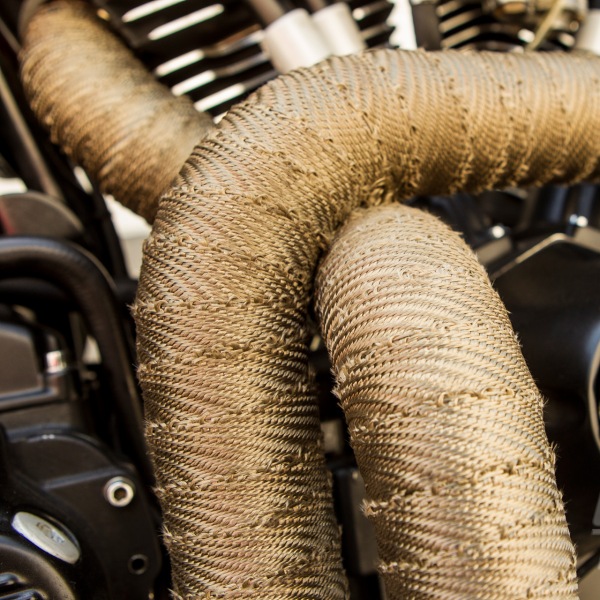
A lower price per roll is not necessarily a lower cost for the finished assembly. Compare quotations against one agreed specification, including usable length, width, construction, finish, accessories and packing.
For example, a 15 m roll and a 50 ft roll are different lengths. A quotation for a single roll is also different from one for a kit containing two rolls and fastening hardware. Normalize those differences before deciding which offer meets the purchasing requirement.
For production planning, consider material consumed per assembly, installation waste, repacking work and the number of product codes that must be stocked. These are purchasing considerations to evaluate alongside the unit price, not reasons to substitute an unapproved material.
Request minimum order quantity and production lead time against the selected material, dimensions, finish and packaging. Do not assume that a custom printed kit has the same order conditions as an existing roll configuration.
Provide the trial quantity, expected repeat demand and quantity required for each size. Keep the first purchase quantity separate from the annual forecast so the quotation is based on a clear order requirement.
For a planned launch, include the required receipt date and allow for sample review and artwork approval. Confirm the production schedule and shipping arrangement in the quotation; neither should be inferred from a general product page.
| RFQ field | Details to include |
|---|---|
| Application | Exhaust assembly, replacement roll range, distributor stock or private-label kit |
| Material | Preferred fiberglass, titanium or silica construction; product reference or sample if available |
| Dimensions | Width, thickness, usable roll or cut length, units and critical tolerances |
| Operating conditions | Temperature exposure, duty cycle, pipe material and relevant environmental conditions |
| Finish | Required color and any appearance acceptance criteria |
| Accessories | Fastener type, dimensions and quantity per roll or kit |
| Packaging | Bulk or individual packing, labels, artwork, insert and carton requirements |
| Order quantities | Sample quantity, trial order, quantity by product code and expected repeat demand |
| Approval and documentation | Sample checks, required records, document scope and any customer-specific requirements |
A reference sample can help describe the target construction, but attach the requirements that matter most. Two visually similar wraps should not be treated as equivalent without checking the agreed specification.
Yes. BSTFLEX supplies exhaust wrap for OEM and distributor projects, with material, width, roll length and packaging reviewed against the required application and order quantity.
Yes. Provide the preferred packing format, artwork and kit contents with your inquiry. Confirm the finished package using an approved sample before production.
Custom dimensions can be reviewed for the selected construction. Specify actual dimensions, units, tolerances and usable length requirements rather than relying only on a nominal retail size.
Include the required fastening hardware in the kit specification. State the type, dimensions and quantity so the proposed kit can be quoted and checked as a complete item.
Request the MOQ for your exact material, dimensions and packaging configuration. A single minimum should not be assumed to cover all standard rolls, custom sizes and printed kits.
Send the sample with its application, dimensions and performance requirements for review. Confirm the proposed construction and approval criteria before treating it as a replacement for the existing product.
Send BSTFLEX your material preference, dimensions, order quantity and packaging requirements. For assembly-specific projects, include the exhaust drawing or pipe measurements. For private-label kits, include the accessory list and artwork requirements.
Request an exhaust wrap quotation or compare the available products in the Exhaust and Header Heat Wrap category.

No.10, Chuangxin North Road, Nanshan Park, Ningguo Economic and Technological Development Zone, Ningguo City, Anhui Province, China
هاتف/Whatsapp : 0086-15856303740
البريد الإلكتروني : sales@bstbraidedsleeve.com
Skype : vanesa-cheng