عن ماذا تبحث?

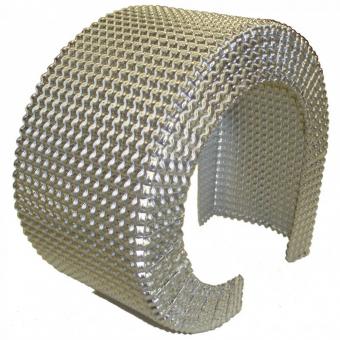
A turbo safety blanket is installed around the turbocharger compressor housing to provide a containment barrier in the event of compressor-side failure. Correct installation depends on more than simply wrapping the blanket around the housing. The blanket must sit in the intended position, remain securely retained and avoid interference with charge pipes, clamps, brackets, wiring and other nearby components.
This guide focuses specifically on installing a BSTFLEX Turbo Safety Blanket. It does not apply to a turbine-side heat blanket. If your project requires thermal insulation around the turbine housing, see the BSTFLEX Turbo Heat Shield Blanket range instead.
The installation procedure should always follow the instructions supplied for the exact blanket and turbocharger configuration. A containment blanket should not be modified, overstretched or secured with improvised hardware to compensate for incorrect fitment.
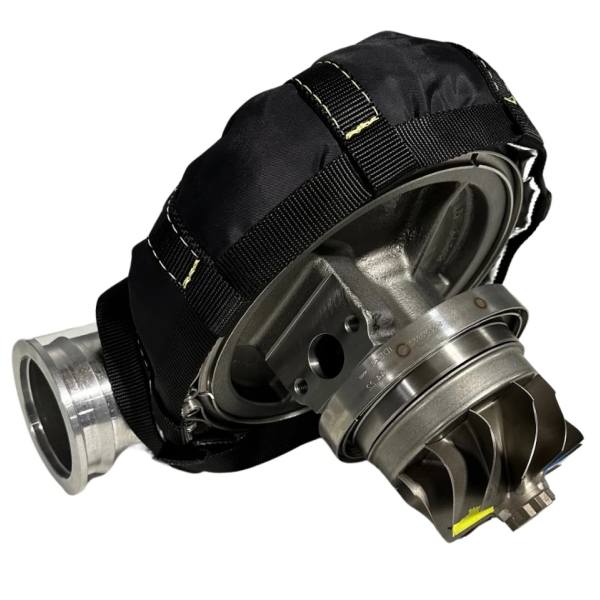
A turbo safety blanket is fitted around the compressor housing, not the turbine housing.
The compressor housing is the cold-side cover that surrounds the compressor wheel and connects to the intake and charge-air system. The purpose of the safety blanket is to provide a reinforced containment layer around this area.
This distinction is important because a turbo heat blanket serves a different function. A heat blanket is normally installed on the turbine housing to reduce radiant heat and improve thermal management. A turbo safety blanket is designed for compressor-side containment.
Do not install a safety blanket over the turbine housing unless the product has specifically been designed and documented for that purpose.
Before fastening the blanket, compare its shape and dimensions with the actual compressor housing.
Check the following:
A blanket that is too small may place excessive load on the seams or fastening system. A blanket that is too large may move, bunch or interfere with surrounding components.
If the housing geometry does not match the blanket pattern, do not force the blanket into position. For custom applications, send housing dimensions, photographs or a drawing to BSTFLEX so the fitment can be reviewed before production.
Place the blanket around the compressor housing without fully tightening the retention system. Use this trial position to confirm orientation and clearance.
Before fastening, check that:
The correct orientation should allow the blanket to follow the housing shape without excessive distortion.
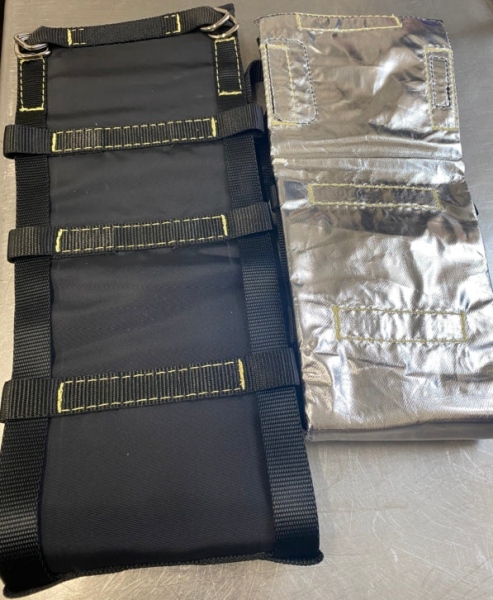
Use the fastening system supplied with the specific blanket. Depending on the design, this may include straps, buckles, reinforced attachment points or other retention hardware.
The objective is to keep the blanket securely positioned during vehicle operation without damaging the blanket or nearby components.
Do not replace the intended fastening system with improvised methods such as:
Improvised fastening can change load distribution around the blanket and may damage the reinforcement or attachment points.
There is no universal tightening torque or strap tension that applies to every turbo safety blanket. Use the installation instructions provided for the exact product rather than assuming that tighter installation is always better.
Clearance is one of the most important parts of installation. The blanket should remain secure without interfering with the turbocharger system or surrounding components.
Confirm that the blanket does not interfere with the compressor outlet or charge-pipe connection. The pipe and clamp must remain properly seated and accessible.
The blanket must not obstruct the compressor inlet or interfere with any inlet pipe, hose or filter connection.
Check whether compressor housing clamps or retaining bands require service access. Do not position the blanket so that routine inspection or removal becomes impossible.
If an actuator, linkage or other moving component is located near the compressor housing, confirm that it can move through its full operating range without contacting the blanket.
Do not allow the blanket to crush, kink or place unwanted pressure on oil or coolant lines. Check fittings and routing before final fastening.
Check wiring and sensors for contact points. A blanket edge that rubs against a wire harness during vibration can create a new maintenance problem even if the blanket itself remains secure.
Inspect brackets, sheet metal and other nearby components for sharp edges or possible rubbing points. Continuous contact can damage the blanket outer layer over time.
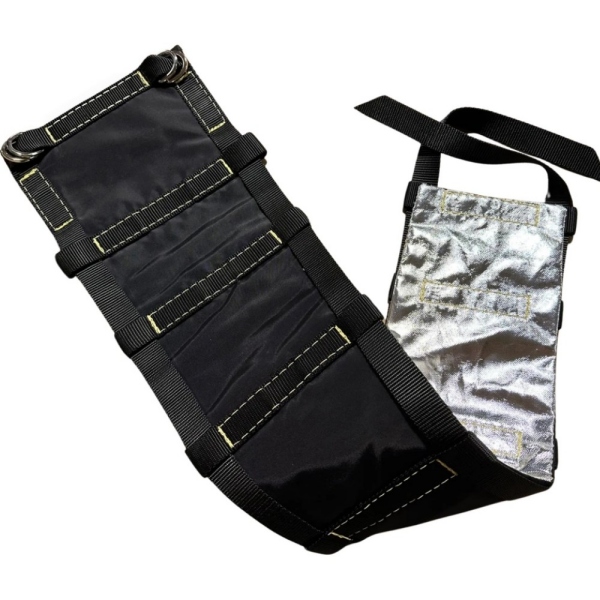
More coverage is not automatically better. Correct coverage depends on the blanket design and the compressor housing configuration.
A properly installed blanket should:
If the blanket must be stretched aggressively to reach the fastening points, the fitment should be reviewed before installation continues.
A turbo safety blanket is intended for compressor-side containment. It should not be confused with a turbine housing heat blanket.
Different compressor housings can have different external dimensions even within similar turbocharger families. Confirm the actual housing configuration rather than relying only on a product name.
Inlet position, outlet orientation, clamps and external features all affect blanket fitment.
Additional wire, cable ties or random clamps should not replace the fastening system designed for the blanket.
Check compressor inlet and outlet connections after the blanket is positioned. Clamps should remain properly seated and accessible.
Repair oil, coolant or other leaks before installation. Do not use the blanket to cover an unresolved mechanical problem.
If the blanket does not match the compressor housing, excessive fastening force is not a proper solution. Review the blanket size or request a custom pattern.
After installation, perform a final visual and physical inspection before the vehicle returns to service.
Confirm that:
Reinspect the blanket after initial operation according to the product instructions and application requirements. Look for movement, rubbing or changes in fastening position.
For ongoing service checks, see Turbo Safety Blanket Inspection: When to Replace a Turbo Shatter Blanket.
A custom compressor housing may require a custom blanket pattern. For project evaluation, provide as much installation information as possible.
| Information | Why It Matters |
|---|---|
| Turbocharger identification | Provides the basic compressor housing reference |
| Housing dimensions | Helps determine blanket size and pattern |
| Clear photographs | Shows inlet, outlet, clamps and external geometry |
| Drawing or scan data | Supports custom pattern development where available |
| Nearby components | Helps identify clearance and interference risks |
| Fastening requirements | Defines the preferred retention arrangement |
| Order quantity | Supports sample, OEM and production planning |
| Branding requirements | Supports OEM or private-label programs |
For more information about custom sourcing and compressor housing fitment, see Turbo Safety Blanket for Racing: Compressor Containment, Fitment and Custom Supply.
A complete turbo protection system may use both containment and thermal insulation, but the two products should not be treated as interchangeable.
If the project also requires turbine housing insulation, review the Turbo Heat Shield Blanket category. BSTFLEX also supplies related Exhaust Heat Shield Insulation and Exhaust and Header Heat Wrap products for broader exhaust-area heat management.
If your compressor housing does not match a standard pattern, BSTFLEX can review custom requirements based on housing dimensions, drawings, photographs and installation conditions.
When requesting a quotation, provide the turbocharger identification, compressor housing measurements, intended application, fastening requirements, estimated order quantity and any OEM or private-label requirements.
View the BSTFLEX Turbo Safety Blanket
Contact BSTFLEX for a Custom Turbo Safety Blanket Quote
It is installed around the turbocharger compressor housing. It should not be confused with a turbine housing heat blanket.
Install the blanket according to the fastening arrangement specified for the exact product. Do not use excessive tightening to compensate for incorrect fitment.
Improvised retention should not replace the fastening system designed for the blanket. Use the supplied or approved retention components.
Check the compressor inlet and outlet, pipe clamps, brackets, actuator components, oil and coolant lines, wiring and available clearance around the housing.
BSTFLEX can review custom size, structure and fastening requirements based on the compressor housing geometry, photographs, drawings and installation conditions.

No.10, Chuangxin North Road, Nanshan Park, Ningguo Economic and Technological Development Zone, Ningguo City, Anhui Province, China
هاتف/Whatsapp : 0086-15856303740
البريد الإلكتروني : sales@bstbraidedsleeve.com
Skype : vanesa-cheng