Should muffler packing be tight or loose? Use the approved filling quantity and installation method for the actual silencer. The aim is a defined fiber distribution around the perforated core, with the clearances and retention layers required by the design. Squeezing in as much material as possible is not a reliable way to achieve it. Neither is leaving the fiber deliberately slack. For OEM assembly, specify the muffler packing material, available packing space, fiber charge and placement method.
The question matters because “firmly packed” means something different to each operator. One person adds another strip near the seam; another compresses the same charge harder before closing the shell. Both may describe the result as tight. Neither description tells purchasing what to order or quality control what to accept.
What does “tight” actually describe?
It can describe the feel of a wrapped core, the force needed to insert it, or how much material occupies a cavity. Those observations are related, but they are not interchangeable measurements. Insertion force can also change with seam position, a folded retaining layer or a local snag. Adding or removing fiber to correct every difficult insertion can leave the actual cause unresolved.
Muffler packing density expresses material quantity in relation to volume. For a useful installed-density value, define both: the acoustic fiber mass being counted and the net space assigned to that fiber. Account for the core, partitions and the installed envelope of any retained layers when defining that space. State the units and the measurement basis. A package weight that includes a bag, stainless steel wool and a retaining screen cannot be used as the fiber-only charge.
Higher density does not automatically mean a quieter exhaust. The fiber construction, cavity geometry, distribution, temperature and complete silencer design all matter. In a straight-through absorptive muffler, the main gas passage is inside the perforated tube while the packing occupies the surrounding region. Tighter packing around that tube does not, by itself, establish that the gas passage is blocked or that backpressure has increased. Inspect displacement or damage separately, and measure pressure loss where the development program requires it.
Separate delivery compression from installed density
A compact shipping pack, a restrained sheet and an installed fiber charge can have very different apparent volumes. Comparing them by hand pressure or package size gives little information about the finished silencer.
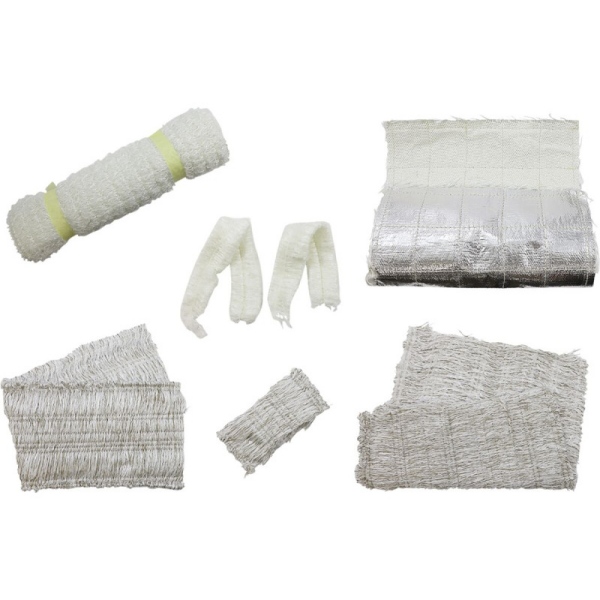
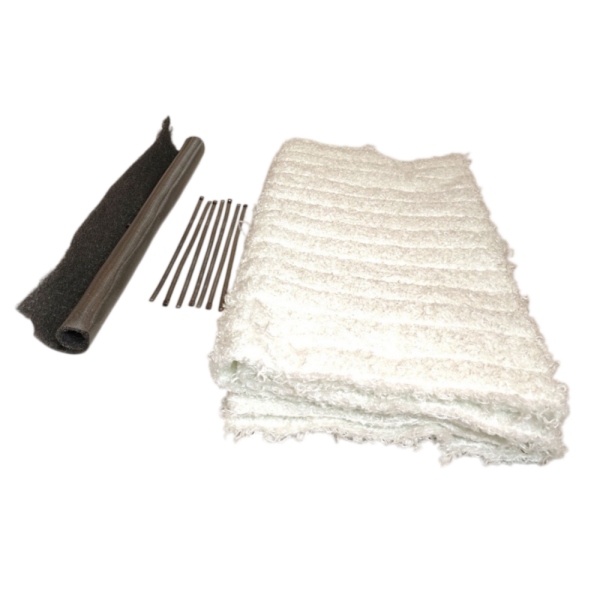
For loose fill muffler packing, the receiving check can confirm the material and net quantity, while the assembly instruction controls how much goes into each cavity. For a conventional fiberglass muffler packing mat, cut dimensions, areal weight and the specified layer arrangement help define the charge. Thickness still needs a stated measurement condition because a compressible material can give different readings under different loads.
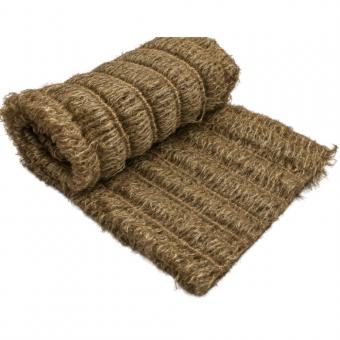
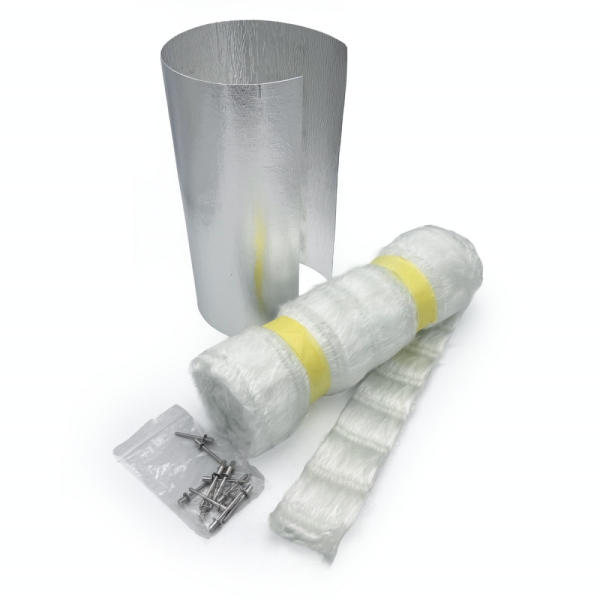
Expanding exhaust packing adds another distinction. The BSTFLEX basalt expanding packing sheet is supplied in a compressed construction with temporary heat-responsive stitching. Release allows the compressed fiber structure to open out within the allocated packing space. It does not create additional basalt fiber, and it does not establish the correct charge for an unknown cavity.
Its compressed thickness therefore serves a different purpose from its installed fiber density. Approve the cut layout, fiber quantity and release procedure together. A sheet that fits neatly before heating still needs its released distribution evaluated.
The same total weight can hide a different internal layout
Consider two assemblies made with the same material and total fiber charge. In one, the charge is distributed along the intended acoustic section. In the other, insertion drags material toward one end and leaves a thin region behind. Their calculated average silencer packing density can be identical even though the local arrangements differ.
An offset core makes this easier to overlook. The narrow side and the wider pocket do not offer the same space. A continuous wrap may need a different layout from a set of shaped pieces or separately weighed charges. Solid partitions can also prevent fiber from reaching an adjacent region. An expanding sheet should not be expected to carry material through those partitions after heating.
Use the drawing to identify the regions that require separate control. Depending on the construction, the work instruction may show a piece orientation, seam position, permitted overlap or a charge assigned to a particular pocket. Photographs or a sectioned development sample can help communicate the approved layout, provided their material and drawing revision are identified.
Keep the total quantity check and the distribution check distinct. A correct scale reading verifies the agreed weight basis; it does not show what happened inside the shell during insertion.
Turn assembly language into a repeatable specification
A practical exhaust packing density specification connects purchasing, assembly and inspection. It does not need to prescribe a universal number. It needs to describe the approved construction clearly enough that the next production lot can reproduce it.
| Informal instruction | Information to specify | What to verify |
|---|---|---|
| “Pack it firmly.” | Material reference, fiber charge and placement method. | Correct quantity and approved distribution. |
| “Use one bag.” | Net charge per silencer or zone; whether the bag is removed or installed. | Bag identity, tare basis and intended handling. |
| “Wrap it twice.” | Material, cut dimensions, layer arrangement, seam and overlap. | Piece identity, fit and orientation. |
| “Use the same weight.” | Whether the value means acoustic fiber, metallic wool or complete component weight. | Each controlled weight on the agreed basis. |
| “Match the old packing.” | Approved drawing and material records or an identified reference sample. | Construction and dimensions; used condition recorded separately. |
For fiberglass muffler packing, a repeat order should retain the actual glass-fiber product reference and construction. “Fiberglass” alone is too broad to define equivalence. The same applies when comparing glass fiber with basalt or another material: equal mass does not establish equal fit, acoustic behavior or durability.
Used packing is a particularly weak weight reference. It may have lost fibers or accumulated oil, water and deposits. Record its condition, but do not treat the removed weight as the original dry charge. Where the original specification is unavailable, identify the replacement quantity as a development requirement.
Compare samples without losing track of what changed
Start with an identified reference construction. Record the shell and core geometry, acoustic material, metallic layers, fiber quantity, distribution and assembly method. Then define the question the next sample is intended to answer. A trial that changes fiber type, filling weight and retaining structure at the same time may compare two complete alternatives, but it cannot isolate the effect of density.
The following comparison plan illustrates how to separate those questions. It supplies no recommended charge or acceptance limit; those belong to the actual development program.
| Sample comparison | Keep consistent | Record and evaluate |
|---|---|---|
| Reference repeat | Approved materials, quantities, geometry and assembly instructions. | Whether the process reproduces the reference before alternatives are compared. |
| Fiber-charge trial | Material, geometry, retention layers and intended placement method. | Each proposed charge, actual distribution, fit and complete-silencer results. |
| Distribution trial | Material, total charge, retention layers and silencer geometry. | Changes to zone allocation, cut layout or seam position. |
| Supply-form trial | Relevant design requirements and documented comparison conditions. | All differences introduced by a mat, loose charge, expanding sheet or contained component. |
Use the same documented sound-measurement procedure and operating conditions when comparing results. Engine speed or load, measurement position, conditioning state and the assembled exhaust configuration should not drift between samples. A material absorption result, a laboratory transmission-loss result and a finished-exhaust sound measurement answer different questions.
Cold fit is one part of the evaluation. Where relevant, include the approved heating procedure, subsequent fiber distribution, retention and the agreed operating trial. Record trimming, added pieces or adjustments made during assembly; otherwise the tested unit may differ from the drawing without anyone noticing.
When a result changes unexpectedly, investigate the documented differences before assigning the result to “tighter” or “looser” packing. That makes the comparison useful to both the exhaust designer and the packing supplier.
Choose a supply form your assembly process can control
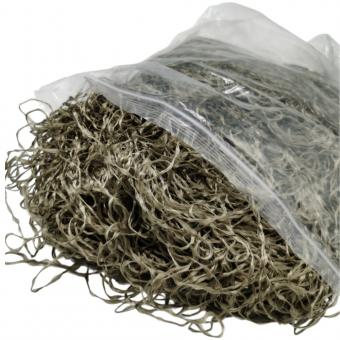
Fiberglass loose fill exhaust muffler packing lets the assembler weigh and place the fiber according to the approved process. That flexibility also leaves the factory responsible for charge control, handling and distribution. Basalt loose fill packing offers another material direction where basalt is specified; its charge should be established for that construction.
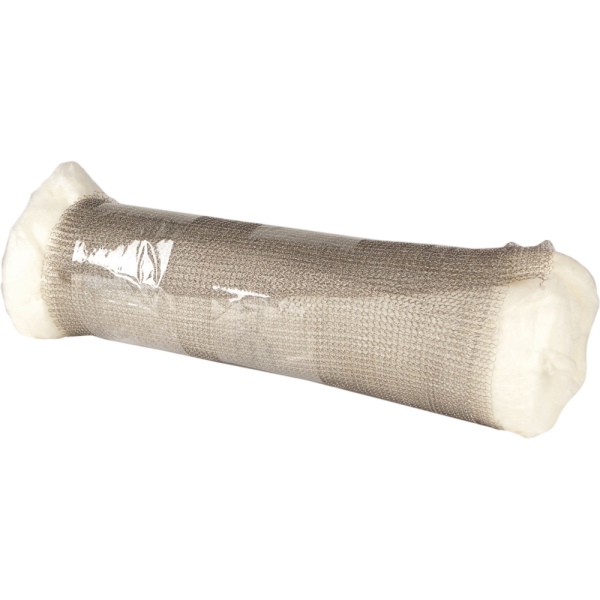
For recurring production, a cut mat or preformed muffler packing component can transfer some preparation to the supplier. A fiberglass muffler packing sock with woven glass mesh containment provides a defined component to position during assembly. Specify its dimensions, filling quantity, containment and fit rather than assuming that every sock has the same installed density.
The purchasing decision is about which operations the line can reproduce. If loose charging is well controlled, changing the form may offer little benefit. If cutting or distribution varies, a prepared component may be worth evaluating. Neither choice removes the need to approve the complete exhaust silencer packing arrangement.

Carry the approved sample into repeat orders
Once a construction is accepted, connect the result to a material specification, drawing revision and assembly instruction. Define the fiber charge or piece quantity, any zone allocation, the separate metallic layers and the measurement conditions used for inspection. Agree tolerances from the project requirements and demonstrated process capability.
A retained sample can illustrate the construction, but it cannot replace written limits. Purchasing and production need to know which changes require review: a different fiber reference, altered cover, revised cut pattern or new cavity geometry may affect the approved arrangement even when the nominal component weight stays the same.
For OEM muffler packing, this is the useful outcome of a density study: a specification that can be ordered, assembled and checked consistently. The word “tight” no longer has to carry all that information.
Questions buyers ask about packing density
Is there one correct density for fiberglass exhaust packing?
No single value can be assigned to every glass-fiber product and silencer. Use the approved value for the material, geometry and installed arrangement, or establish it through development. Confirm the mass and volume basis before comparing values from different specifications.
Will adding more packing always reduce exhaust noise?
No. Extra fiber changes the construction and may alter local compression, fit and distribution. Evaluate proposed changes under the same test conditions rather than assuming that greater mass produces a better acoustic result.
Can a pre-weighed charge replace distribution checks?
A pre-weighed charge controls quantity on the specified weight basis. Placement still needs control, particularly around offset cores, partitions and end pockets. Confirm both the charge and the finished layout during development.
Discuss the packing specification with BSTFLEX
For custom muffler packing development, send the silencer cross-section, current material reference, fiber charge if known, layer arrangement and assembly method. Include the problem you want the next sample to resolve and the expected production quantity. Mark unknown values as development items so the review starts from the actual information available.